

Loading...
FusionX is the sovereign intelligence engine at the core of Smart Navigator; the technology that turns fragmented, fast-moving, multisource data into a single, understandable, continuously evolving source of truth.
In environments where information is distributed across silos, systems, sensors, and domains, FusionX acts as the connective tissue. It harmonizes streaming, structured, unstructured, geospatial, sensor, network, and mission-specific data into a unified ontological model that updates in real time.
FusionX is designed to:

At the core of FusionX lies the Dynamic Ontology Engine which is a living knowledge layer where both humans and AI agents can redefine and reinterpret the semantics of entities over time.
Instead of treating ontologies as fixed taxonomies, FusionX enables:
This bi-directional framework is the foundation of hybrid intelligence, where knowledge is no longer static but learns with you.
The FusionX dynamic ontology operates on a dual-control mechanism:

During runtime, the Dynamic Ontology Engine:
Every reinterpretation is:
The result is a self-adaptive semantic model that balances:

FusionX Data Adaptors act as the primary gateway between your external ecosystems and the FusionX intelligence core. They integrate data from a wide landscape of platforms and systems, including:
Through these integrations, FusionX can ingest data modalities such as:
Every adaptor is an intelligent, configurable pipeline capable of both streaming and on-demand acquisition, transf...
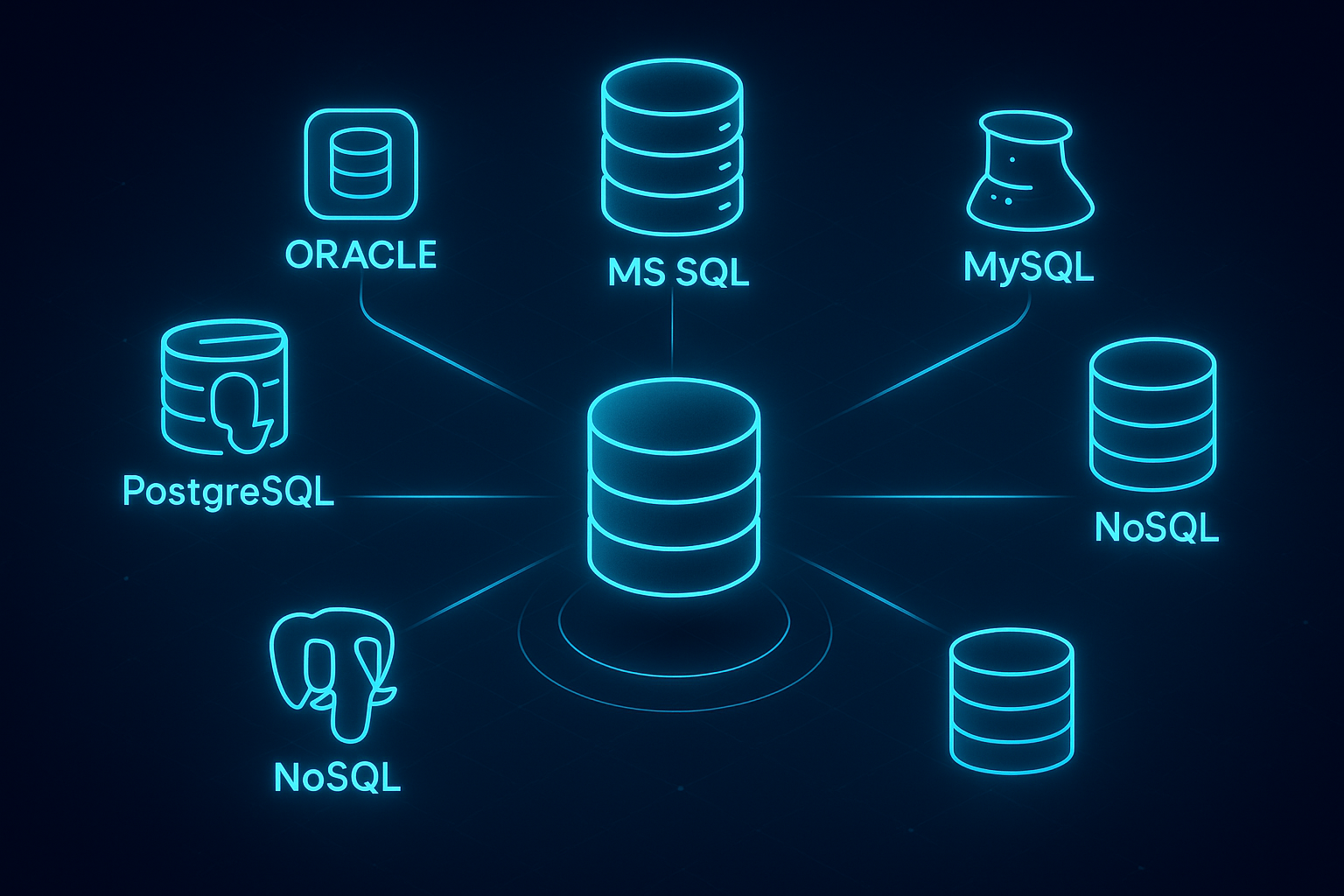
FusionX RDBMS Connectors integrate external relational databases such as PostgreSQL, Oracle, MySQL, MS SQL Server, and others which allows users to reuse existing enterprise data without re-platforming.
Admins can visually define:
Key Features:

Data Collectors are specialized components that connect FusionX to streaming and non-streaming interfaces such as APIs, web services, and web-sockets.
Through the FusionX UI, users configure:
Once configured, collectors automatically retrieve and forward data into the FusionX ingestion pipeline.
Key Features:
Document Repository Adaptors handle unstructured and semi-structured content stored in document repositories and file systems.
They integrate with:
Capabilities:
By lifting information out of static files and into the...